

Imagine a small electrical spark on a production floor turning into a fast-spreading fire. Alarms ring, smoke builds, and employees must respond within seconds, yet most have only practiced fire safety through slides, posters, or basic extinguisher demos. In real emergencies, hesitation or confusion can escalate the situation instantly.
This gap between theoretical learning and real-world action is exactly why organizations are adopting VR fire safety training. By placing employees inside lifelike scenarios, VR helps them practice identifying fires, choosing the right extinguisher, and evacuating under pressure, without facing actual danger.
Why Companies Are Adopting VR Fire Safety Training
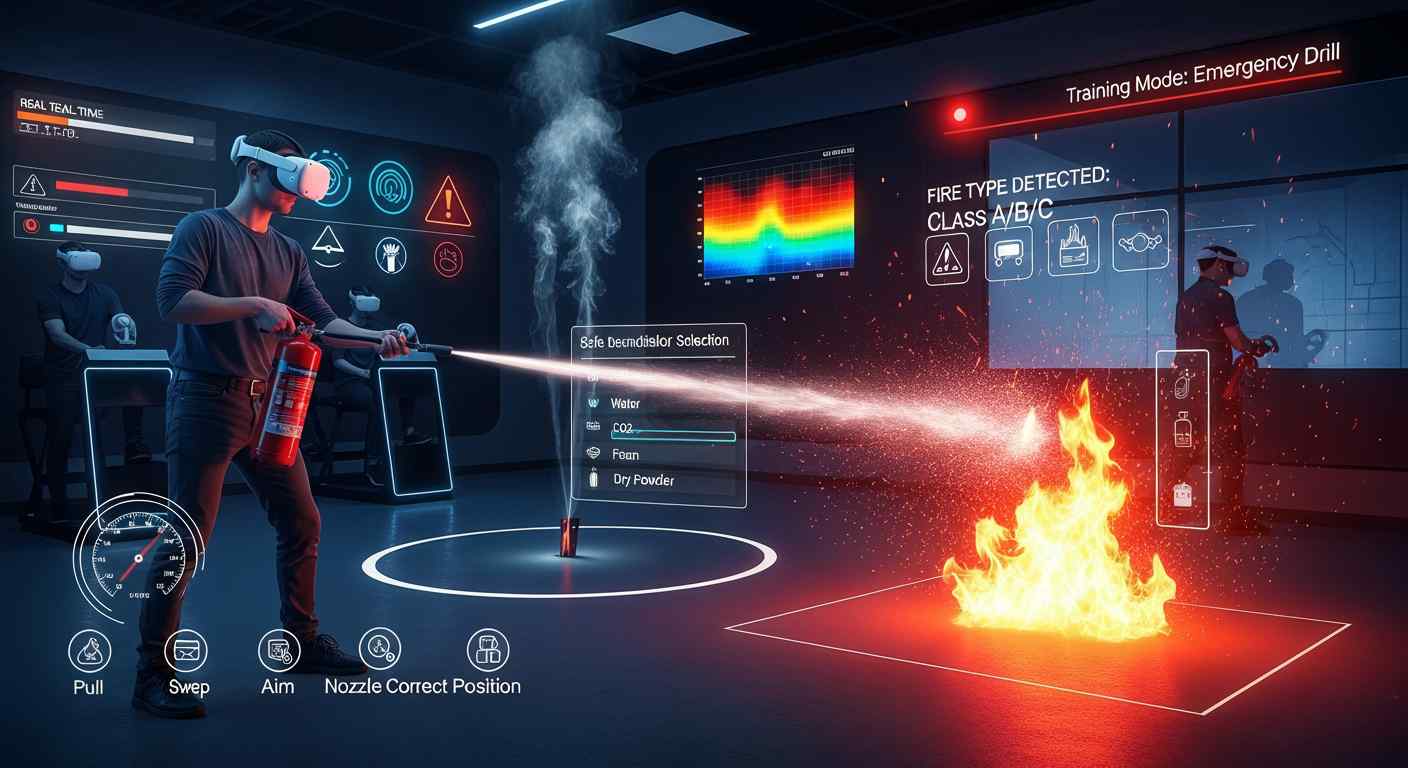
Traditional fire safety training often lacks realism and doesn’t fully prepare employees for actual emergency conditions. VR fire safety training solves this by placing learners inside lifelike, interactive environments where they can practice:
- Identifying fire classes
- Selecting the right fire extinguisher
- Operating extinguishers (CO₂, Foam, Water, Dry Chemical, Wet Chemical)
- Reacting to alarms and emergency cues
- Following evacuation routes
This hands-on virtual experience builds confidence and accuracy without exposing employees to real danger.
Benefits of Integrating VR Fire Safety Training Into HSE Programs
1. Realistic, Risk-Free Simulations
Employees can practice handling small and large fire events without exposure to actual danger. VR creates lifelike scenarios like electrical fires, chemical fires, kitchen blazes, and confined-space ignition.
2. Repeatable and Consistent Training
Every employee undergoes the same training standard eliminating inconsistencies common in live drills.
3. Improves Decision-Making Under Pressure
VR introduces urgency, smoke, alarms, blocked exits, and time-sensitive challenges, building real-world readiness.
4. Cost-Effective in the Long Run
Organizations reduce recurring costs of physical drills, equipment wear-and-tear, and resource allocation.
5. Objective Assessment & Analytics
HSE teams receive measurable data on:
- Reaction times
- Correct equipment usage
- Evacuation path accuracy
- Compliance with fire protocols
This allows for targeted coaching and improved safety planning.
Types of VR Fire Safety Training Modules You Can Add
- Fire Extinguisher Operation (CO₂, foam, dry chemical, water)
- Identifying Fire Classes (A, B, C, D, K)
- Electrical & Chemical Fire Response
- Emergency Evacuation Procedures
- Kitchen Fire Scenarios
- Warehouse Fire Response
- Confined Space Fire Incidents
- Alarm Recognition & Immediate Actions
These modules can be tailored to your workplace, whether industrial, commercial, or high-risk environments.
Conclusion
VR fire safety training is becoming essential for modern HSE programs, offering realistic practice, better engagement, and stronger emergency readiness. With immersive scenarios and measurable outcomes, VR helps teams learn faster and respond more confidently during real incidents.
For organizations planning to adopt advanced VR training, DevDen delivers industry-ready solutions tailored to real workplace conditions. As a leading VR training company, we offer interactive, scalable fire safety modules that enhance workforce preparedness.
Upgrade your HSE program with interactive VR fire safety training now and ensure your teams are ready for any emergency.

