

Industrial equipment operators play a critical role in ensuring safe and efficient operations across manufacturing, construction, mining, logistics, and heavy industries. However, traditional training methods often face challenges such as equipment downtime, safety risks, high training costs, and limited hands-on practice opportunities.
Virtual Reality (VR) training is transforming how organizations prepare equipment operators by providing immersive, realistic, and risk-free learning experiences. By simulating real-world equipment and operating environments, VR training helps operators build confidence, improve skills, and reduce operational risks before they step onto the actual worksite.
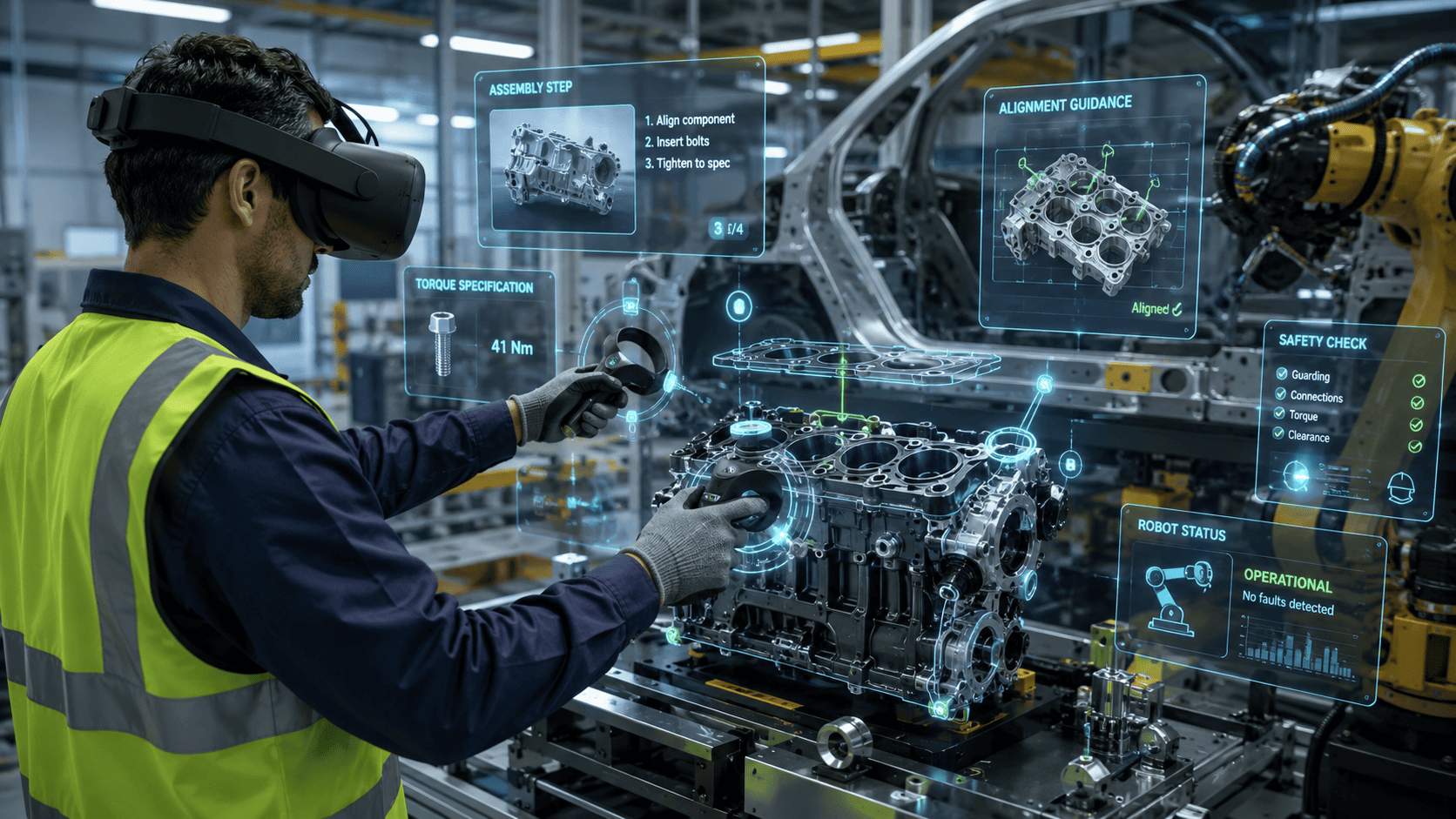
Why VR Training for Equipment Operators?
Training operators on heavy machinery and industrial equipment requires practical experience. However, conducting training on live equipment can be expensive and potentially hazardous. VR training addresses these challenges by creating realistic virtual environments where operators can learn, practice, and make mistakes without real-world consequences.
Key Benefits of VR Training for Industrial Equipment Operators
1. Enhanced Safety Training
Safety is one of the most significant concerns when operating industrial equipment. VR equipment training allows operators to experience hazardous scenarios, emergency situations, and equipment malfunctions in a completely safe environment.
Operators can practice:
- Equipment startup and shutdown procedures
- Hazard identification
- Emergency response actions
- Safe operating practices
- Accident prevention techniques
This hands-on experience helps improve safety awareness and reduces workplace incidents.
2. Realistic Hands-On Learning
VR simulations replicate actual equipment controls, operating procedures, and work environments. Trainees can interact with virtual machinery just as they would in real life, creating a highly engaging learning experience.
The immersive nature of VR improves knowledge retention and helps operators develop muscle memory for critical tasks.
3. Reduced Training Costs
Traditional equipment training often involves:
- Equipment allocation
- Fuel and maintenance expenses
- Instructor costs
- Production downtime
VR training minimizes these expenses by allowing multiple trainees to practice without affecting ongoing operations. Organizations can deliver consistent training while reducing operational costs.
4. Increased Operator Confidence
Many new operators feel nervous when handling expensive or complex machinery for the first time. VR training provides unlimited opportunities to practice operating procedures before transitioning to real equipment.
As operators gain experience in virtual environments, their confidence improves, leading to smoother performance in real-world operations.
5. Standardized Training Experience
Training quality can vary depending on instructors, locations, and available equipment. VR training ensures every operator receives the same standardized learning experience, procedures, and assessment criteria.
This consistency helps organizations maintain operational standards across multiple facilities and locations.
6. Faster Skill Development
VR training enables trainees to repeat tasks as many times as needed until they achieve proficiency. Immediate feedback and guided learning accelerate skill development compared to conventional training methods.
Organizations can reduce onboarding time while ensuring operators are job-ready faster.
7. Risk-Free Practice of Complex Scenarios
Certain situations, such as equipment failures, emergency shutdowns, or hazardous operating conditions, are difficult or dangerous to recreate during traditional training.
8. Performance Tracking and Assessment
Modern VR training solutions can track operator performance and provide detailed analytics, including:
- Task completion rates
- Safety compliance
- Error frequency
- Response times
- Skill progression
These insights help trainers identify knowledge gaps and provide targeted improvements.
9. Training Despite Locations
Organizations with multiple facilities often face challenges in delivering consistent operator training. VR training can be deployed across locations, allowing employees to access the same training modules regardless of where they are based.
This helps save time and ensures standardized workforce development despite locations.
10. Improved Equipment Utilization
By moving initial training into virtual environments, organizations can reduce the amount of time real equipment is used for training purposes. This increases equipment availability for production activities while extending machinery lifespan.
Conclusion
Virtual Reality training is transforming industrial equipment operator training by providing a safe, immersive, and cost-effective way to develop skills and improve workplace safety. As industries continue to modernize their workforce training programs, VR offers a practical solution for enhancing operator competency, reducing risks, and improving operational efficiency.
At DevDen, we develop customized VR training solutions that enable organizations to deliver realistic, hands-on training for equipment operation, safety procedures, maintenance, and emergency response, helping build a safer and more skilled workforce.

