

Product manuals have traditionally relied on printed instructions, diagrams, and written explanations to help users understand how products work. While these resources provide essential information, they can sometimes make it difficult for users to understand complex assembly steps, identify components, or follow maintenance procedures.
AR development is introducing a more interactive approach to product documentation. By combining real-world environments with digital information, Augmented Reality (AR) allows users to view 3D models, visual instructions, and step-by-step guidance directly through their smartphones, tablets, or AR-enabled devices.
Instead of relying entirely on text and static illustrations, businesses can use AR applications to make product manuals more visual, accessible, and easier to follow.
Moving Beyond Traditional Product Manuals
Traditional product manuals often require users to interpret written instructions and relate two-dimensional diagrams to physical products. This can become challenging when dealing with products that have multiple components, complex assembly procedures, or detailed operating requirements.
AR-based product manuals offer another way to communicate this information.
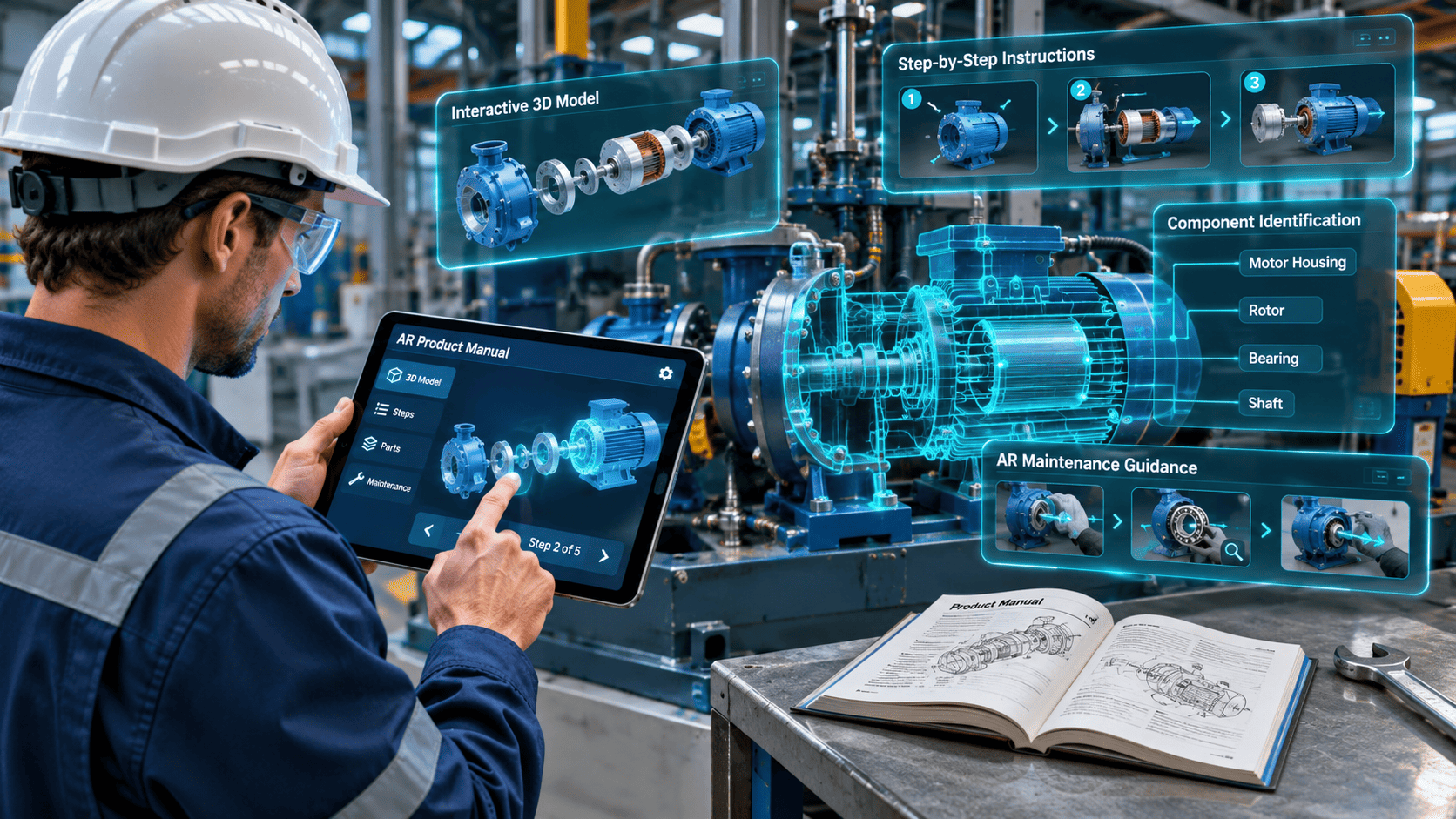
Through an AR application, users can point their device towards a product or a specific component and view relevant digital information overlaid onto the real-world object. This can include 3D models, highlighted components, animated demonstrations, and sequential instructions.
For example, someone assembling a piece of equipment can follow visual guidance showing where each component belongs and how it should be positioned. This makes the instructions easier to understand without constantly referring to different pages of a manual.
How AR Development Makes Product Instructions More Interactive
AR app development allows businesses to move beyond static documentation and create experiences that guide users through different product-related activities.
Here are some ways AR can be used to make product manuals more interactive.
1. 3D Visual Instructions
Written descriptions and flat illustrations may not always communicate the structure or positioning of product components clearly.
AR applications can display interactive 3D models that users can view from different angles. Components can be highlighted, separated, or demonstrated to explain how different parts fit together.
For example, when assembling a machine, users can view individual components in 3D and understand how they connect before proceeding to the next step.
2. Step-by-Step Assembly Guidance
Product assembly can involve multiple stages, particularly for machinery, furniture, electronic equipment, and industrial components.
AR-based instructions can guide users through each stage by displaying visual indicators, animations, and component highlights over the physical product.
Users can follow the sequence at their own pace, making it easier to understand assembly procedures and identify the correct placement of components.
3. Equipment Operation and Usage Instructions
Understanding how to operate a product correctly is just as important as assembling it.
AR development can bring operating instructions directly into the user’s field of view. Relevant buttons, controls, switches, and operating components can be highlighted through digital overlays.
For instance, an AR application for industrial equipment can identify important control panels and display visual guidance explaining their functions and operating sequence.
This approach can make product usage instructions more accessible, particularly when users are unfamiliar with the equipment.
4. Maintenance and Troubleshooting Support
Maintenance manuals often contain detailed procedures that users need to follow to inspect, service, or troubleshoot products.
With AR applications, users can view visual guidance directly over the equipment they are working with. Specific components can be highlighted to indicate inspection points, service locations, or parts that require attention.
AR-based troubleshooting guides can also present sequential instructions to help users understand possible issues and follow the recommended procedures.
This provides a more visual way to access maintenance information when working with complex products and equipment.
5. Interactive Product Demonstrations
Some product features and internal mechanisms are difficult to understand through photographs or written descriptions.
AR applications can present animated 3D demonstrations that explain how a product functions. Users can explore different components, view internal structures, and understand product features through interactive visual experiences.
This can be particularly useful for technical products, electronic devices, machinery, and equipment with complex operating mechanisms.
Industries That Can Benefit from AR-Based Product Manuals
AR-powered product documentation can support different industries where clear product instructions, assembly guidance, and maintenance information are important.
Manufacturing and Industrial Equipment
Manufacturers can use AR applications to provide visual assembly instructions, explain machine components, and guide equipment operators through product-related procedures.
Automotive
Automotive companies can introduce AR-based guides to explain vehicle components, demonstrate basic maintenance procedures, and provide visual instructions for specific vehicle features.
Consumer Electronics
Electronic product manufacturers can use AR manuals to demonstrate product setup, explain different functions, and guide users through installation and troubleshooting procedures.
Furniture and Home Appliances
AR applications can help users understand furniture assembly, identify individual components, and follow installation instructions through interactive 3D demonstrations.
Engineering and Machinery
Businesses dealing with complex machinery can use AR to present component-level information, demonstrate equipment functions, and provide visual maintenance guidance.
The Role of AR App Development in the Future of Product Documentation
As products become more sophisticated, the need for clear and accessible documentation continues to grow. Businesses are exploring digital alternatives that can communicate product information more effectively and support users throughout different stages of product usage.
AR development offers an opportunity to bring product documentation closer to the actual product. Rather than switching between a physical object and a separate instruction manual, users can access relevant visual guidance within their real-world environment.
From product assembly and equipment operation to maintenance and troubleshooting, AR applications can make technical information easier to explore and understand.
While traditional manuals will continue to serve an important purpose, AR-powered documentation provides an additional way for businesses to deliver product information and support users.
Develop Interactive Product Manuals with DevDen
At DevDen Creative Solutions, we develop customized AR applications that bring product information, instructions, and 3D content into interactive digital experiences.
Our AR development capabilities include 3D product visualization, interactive component demonstrations, step-by-step instructions, and AR-based product guidance. We work with businesses to develop applications based on their products, workflows, and intended user experiences.
Whether you are exploring AR for product assembly, equipment maintenance, or interactive product manuals, we can help you explore the possibilities of a suitable AR application.
Looking to make your product manuals more interactive? Contact DevDen to discuss your AR app development requirements.
